
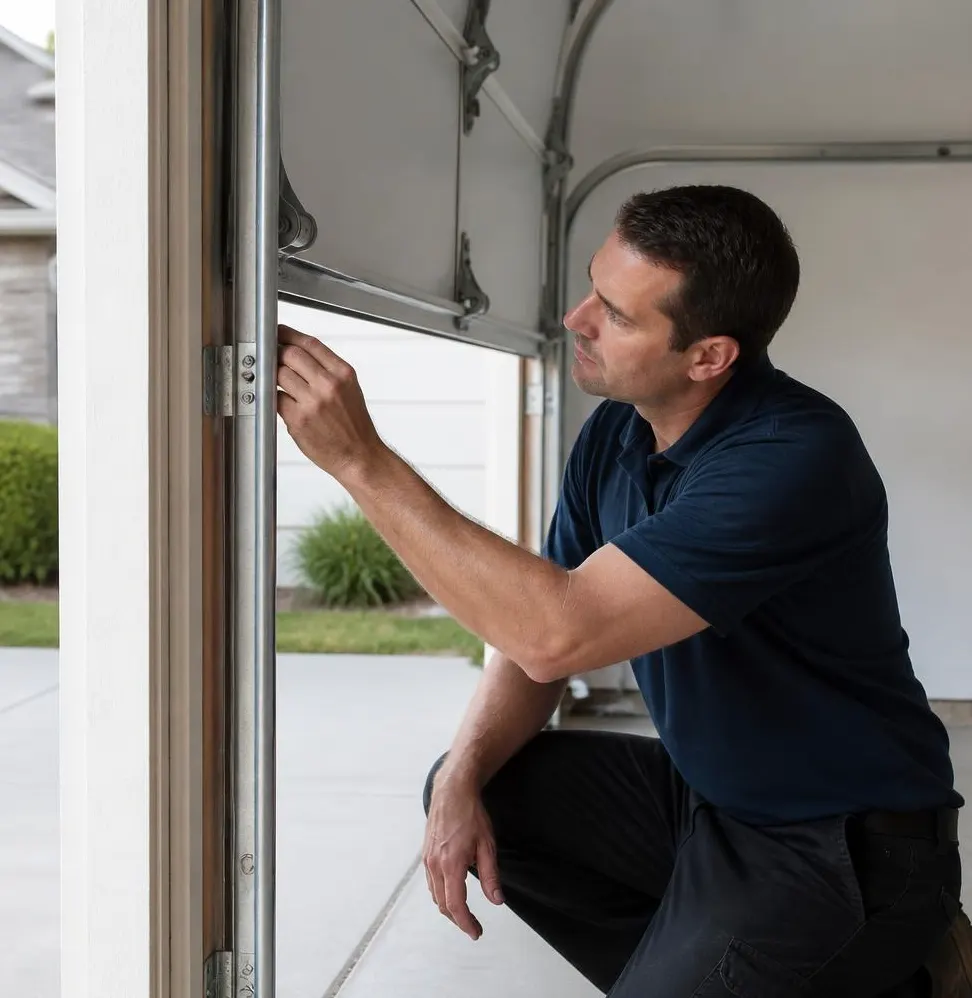
The Morning It Starts Groaning
You hit the button, and instead of the usual smooth roll, the door shudders, pauses halfway, or lets out a groan that wasn't there last week. Maybe it feels heavier than usual when it lifts, or it stutters on the track like something's catching. If this happened on one of the first genuinely cold mornings of the fall, that's not a coincidence. Garage doors that run fine all summer often start acting up the moment temperatures drop, and in this part of Indiana, that drop can happen fast.
Metal contracts in the cold. Lubricant thickens or hardens. Rubber seals that were flexible in August turn stiff and brittle. None of that is a mystery once you know what's happening — and most of it is fixable before winter actually arrives, while you still have a dry weekend to work with.
Check the Balance Before You Touch Anything Else
Before lubricating or adjusting anything, find out whether the door itself is still balanced. Pull the release cord to disconnect it from the opener, then lift the door by hand about halfway. A properly balanced door will stay roughly where you put it. If it drops on its own or shoots upward, the springs are no longer doing their job correctly.
This matters more in winter than people expect. Torsion springs under tension behave differently as temperatures swing, and a door that was borderline balanced in September can become a real problem by December. Do not attempt to adjust torsion spring tension yourself — the springs store a dangerous amount of energy and have caused serious injuries to DIYers. If the balance test fails, that's a job for a technician, not a weekend project.
Inspect the Seals Before the First Hard Freeze
Walk around the door and look at the weatherstripping along the bottom, sides, and top. In this climate, seals take a beating — summer humidity softens rubber over months, then winter cold hardens and cracks it, and road salt brought in on tires and boots accelerates the breakdown along the bottom seal especially.
Look for:
- Cracking or flaking along the bottom astragal (the seal that touches the garage floor)
- Gaps where daylight shows through at the sides or top
- A seal that's flattened or torn from a winter of cars rolling over it
A failed bottom seal doesn't just let in cold air — it lets in meltwater and salt brine, which puddles against the door's bottom panel and track hardware all winter. That moisture-and-salt combination is exactly what causes rust on tracks, rollers, and the bottom of steel doors. Replacing a worn bottom seal is inexpensive compared to the corrosion it prevents.
Lubricate Before, Not After, the First Freeze
Hinges, rollers, and the torsion spring itself all need lubrication, and the type matters. Skip household oils and WD-40 — they're thin, they attract grit, and they gum up in cold weather instead of protecting moving parts. A garage-door-specific lithium or silicone-based lubricant stays effective across the temperature swings this area sees, from humid fall days down to single-digit mornings.
Apply it to the hinges between panels, the roller stems (not the wheels themselves if they're nylon), and the springs. Do this while temperatures are still mild — once things are frozen or caked with road salt residue, lubricant doesn't penetrate as well.
Clean the Tracks and Check for Misalignment
Tracks accumulate more than dust over a summer — they pick up salt residue and grime tracked in on tires, especially once winter driving starts. Wipe the tracks down with a damp cloth and check for rust spots starting to form, particularly near the bottom where road salt collects.
While you're at it, check alignment. The repeated expansion and contraction of metal through a full South Bend year — hot, humid summers into cold, icy winters — can gradually shift tracks out of true. A door that scrapes, binds, or runs unevenly on one side is often a track issue rather than a spring or opener problem.
Don't Forget the Opener
Cold weather is hard on batteries, including the backup battery in openers that have one and the battery in your wireless keypad. Test both now rather than discovering they're dead during a winter power outage. Also check that the photo-eye safety sensors near the bottom of the tracks are clean and properly aligned — road salt spray and winter grime can coat them, causing the door to refuse to close or reverse unexpectedly.
When to Call South Bend Garage Door Service
If the balance test fails, if you hear grinding or popping from the spring area, or if the door has started reversing itself or struggling partway through its cycle, that's the point to stop troubleshooting and call in a technician. Our Spring Replacement service handles the parts that aren't safe for homeowners to touch, and our Preventive Maintenance visits cover a full inspection — tracks, cables, rollers, seals, and opener settings — so small issues get caught before a January cold snap turns them into a door that won't open at all.
If you're noticing any of the signs above in your garage right now, get it looked at before winter sets in for good. Call South Bend Garage Door Service today — we serve South Bend, Mishawaka, Granger, Osceola, Elkhart, Niles, Roseland, and Notre Dame, and we'd rather fix a small problem in October than an emergency one in February.